I have always had a somewhat complicated relationship with the romance genre. The reason wasn’t about the works themselves; it was about my personal life. Teen years, are when people experience their first romantic relationships. Unfortunately, during that period, I suffered from so much emotional, physical, and sexual abuse. My teen years were so lonely, especially because I didn’t have anyone to talk to about what was going on. Along with me having horrible friends who would go off and tell guys I had a crush on my business. I would watch romance movies and read high school romance manga as a form of escapism. I wondered if I would ever get treated decently romantically.
CW: Discussions of sexual and physical abuse and consent | Spoilers: Neighborhood Story, My Little Monster, Vampire Dormitory, Tsurezure Children, and Tomo-Chan is a Girl!
Now that I am much older, I have a healthier relationship with the romance genre. I no longer turn to these stories to escape the horrible things going on in my life. I now go to them because I genuinely enjoy the genre. It’s really fun to engage with stories about people falling in love in convenient and unconventional ways. But with aging, tastes start to change, and every so often, when a new romance anime or manga is released, I find myself passing on the stories more and more. What’s happening here? Do I not like romance anymore?
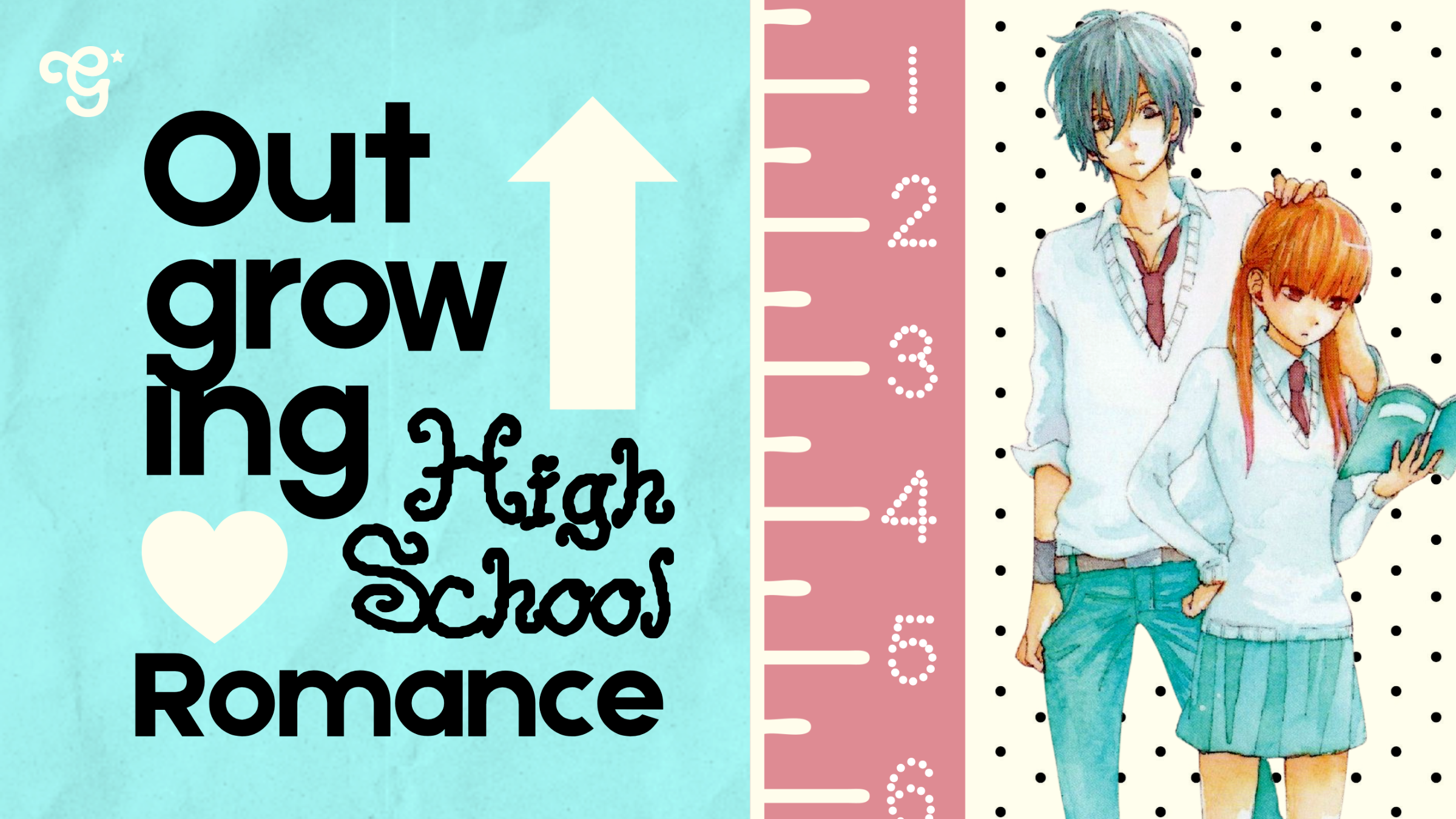
Turns out I don’t dislike the romance genre; I’m just no longer interested in love stories about high schoolers. I have outgrown high school romance; why?


For this study, I picked 5 series: Neighborhood Story, My Little Monster, Vampire Dormitory, Tsurezure Children, and Tomo-Chan is a Girl!. Briefly, these series differ but share similarities. That’s why I have outgrown the high school romance genre.
These series only work because of characters being as young as they are. To be frank, the characters do borderline abusive and questionable things to one another. They don’t realize it because of how much awareness they lack. In Tomo-Chan is a Girl! and My Little Monster, the characters act violently towards one another and other people. In Tomo-Chan is a Girl! Junichiro is jealous that Tomo is getting closer to the captain of the boys’ team. He hits him the first time he meets him.
Tomo herself even punches Junichiro on the face when he wasn’t being honest with her. With My Little Monster, much of the plot revolves around Haru being violent to people, sometimes even towards his love interest, Shizuku. In Neighborhood Story, Yuueske waits for Mariko to get out of school without telling her. He then yells at her to get on his bike while she’s crying. This is after she mentions she’s worried he’s only getting close to her because she assumes he wants to sleep with her. While Yuueske’s frustration with the assumption was reasonable, him shouting at Mariko was uncalled for!
Consent is also a major issue, as the characters do not fully understand what it is for the most part.


In Tsurezure Children, Akagi coerced Ryōko into kissing him, and if she didn’t, he would report her for smoking. In Vampire Dormitory, Ruka literally starts taking Mito’s clothes off when he notices she hasn’t changed into her work uniform, which upsets her. My Little Monster as well, Haru licks Shizuku’s hand out of nowhere some time after confessing that he likes her. She’s clearly uncomfortable with it. Even in Tomo-Chan is a Girl!, Junichiro unzips Tomo’s jacket when it’s clear she’s uncomfortable wearing a bikini and doesn’t want him to do that. Nowhere am I saying the storytelling in these series are bad because of these factors; if these characters were adults, we would judge the storytelling differently. These actions would be automatically flagged as red, with no excuses made for them.
Communicate please!


I caught on that the main trope in high school romance stories is communication, well, the lack thereof. The entirety of Tsurezure Children is about the students at this school not knowing how to talk to their crushes, boyfriends, and girlfriends. The major issue with Mariko and Yuueske’s relationship in Neighborhood Story had to do with the two not being honest enough with each other about their trajectory. It’s clear that Yuueske begins to develop feelings for another girl named Ayumi, who starts to hang around him and Mariko, while Mariko is still crushing on her childhood friend Shuuji, whom she reconnects with.
Vampire Dormitory focuses on a love triangle between Mito, Ruka, and Ren for a good chunk of the story. Neither Ruka nor Ren does a good enough job of talking their feeling out with Mito. It’s so bad here that Mito almost marries Ren because of the lack of proper conversations that needed to be had.
These storylines often feel juvenile, well, because the characters’ frontal lobes aren’t fully developed.


If you’re going to be engaging with media about teenagers, you have to accept that they are going to act their age. As wholesome as Tomo-Chan is a Girl! is overall, so much of the story is about Tomo wanting to change who she is because she wants Junichiro to see her in a different light. When they first met when they were little, Junichiro never saw Tomo as a girl. She was stronger than he was, so he didn’t see her the way he saw the other girls at their school, as feminine. In My Little Monster, Chizuru, Haru’s classmate, mentions she wishes she were the kind of girl Haru would love.
Also in the series, Shizuku worried she would fall behind on her studies if she had feelings for Haru. That was understandable because when I was in high school, plenty of girls started to get bad grades when they got a boyfriend, which is why our teachers had a talk with us about guys being distractions. In Neighborhood Story, Mikako is considering turning down an amazing opportunity in her fashion career to stay with her boyfriend, Tsutomu, in their hometown. A long time ago, when I was a teenager, I would be eating these stories up because my friends and classmates were dealing with similar things, but as an adult, I am disengaged and slightly annoyed.
Yes, I pretty much enjoyed every series I covered here for what they were, but I would be completely fine if I never read a high school romance manga or watched a high school romance anime ever again.


Because of all the abuse I suffered from during my teen years, sometimes these works trigger me slightly with the concerning actions of the characters, and I just don’t feel connected with high school romance overall; that’s fine. Walking around school with your crush was something I never experienced. Confessing my feelings resulted in me being led on and taken advantage of. It wasn’t fun having people say such nasty things about me that pushed others away from me. My first healthy romantic interactions did not happen until I became an adult. The feeling isn’t jealousy, it’s disconnection.
Many turn to high school romance anime and manga to reminisce about their teenage relationships. I however, have very little pull toward them. When I find out about a new romance manga or anime coming out, the first thing I do is check the characters’ ages. That alone tells me whether it’s for me or not. Accepting that you are no longer the audience for something will allow you to move towards the works that really capture you. Adult romance has been my cup of tea for a while, so I will be sticking with that.