Horror has always been a genre that explores pressing social issues, and Parasyte: The Maxim is no exception.
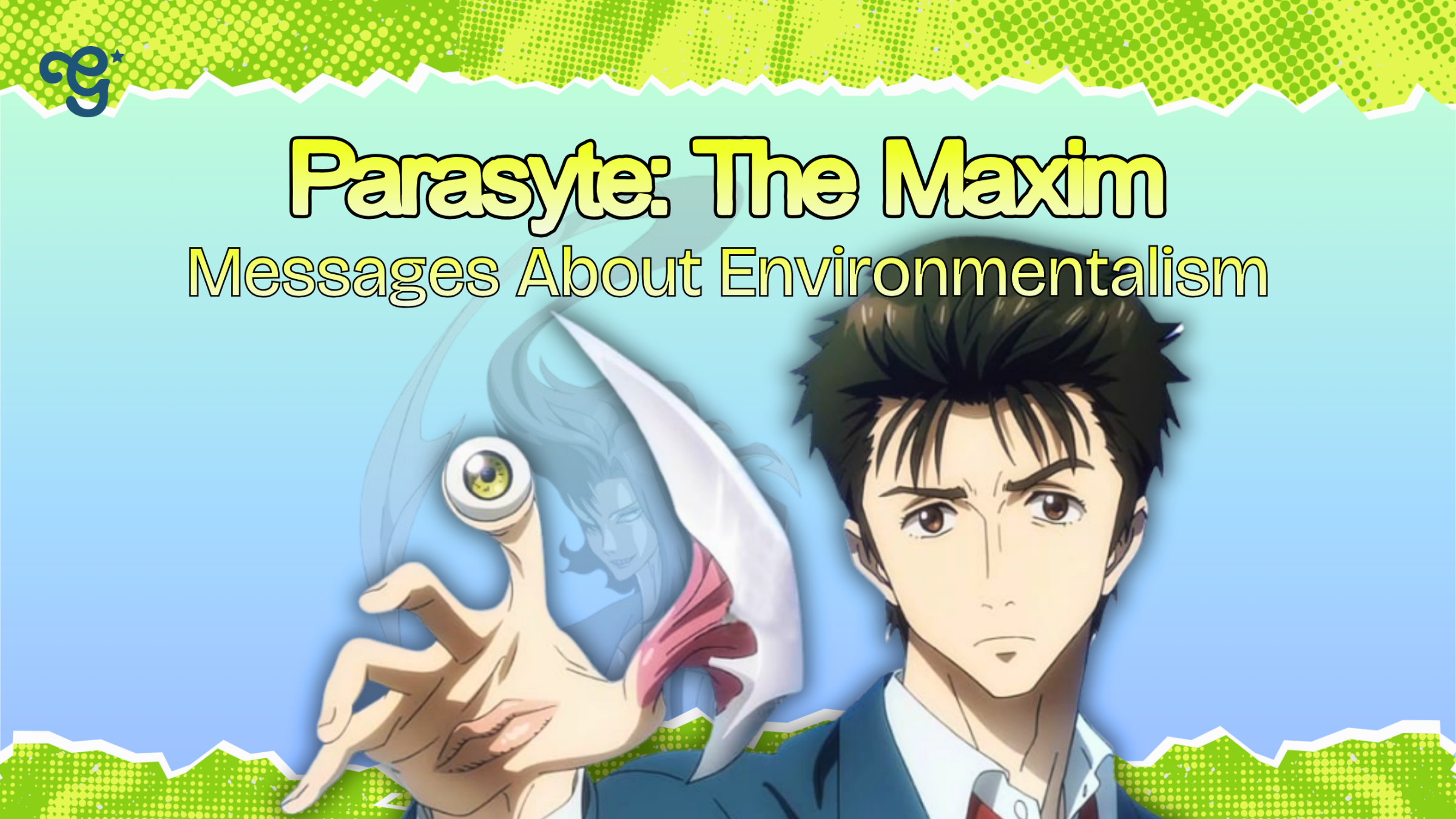
The 2014 body horror and sci-fi anime is considered a canon adaptation of the Parasyte manga, which ran from the late 1980s through the early 1990s. From this point on, Parasyte will refer to the anime adaptation unless otherwise noted. Parasyte follows Shinichi Izumi, a high school student who wakes up one random day to find an alien-like creature named Migi (which means “right” in Japanese) inhabiting where his right hand used to be. The majority of parasites kill people by taking over their brains, adopting the exact appearance of their human “hosts,” which enables them to slyly consume humans to stay alive. Unlike the other parasites, Migi fails to kill Shinichi, allowing Shinichi to keep his consciousness.
Biologically intertwined, Shinichi and Migi must work together to survive relentless gruesome attacks from other parasites who want them dead. Through body horror and science fiction, Parasyte explores the human impact on the environment and other living beings.
Parasyte emphasizes the importance of an intersectional approach to environmentalism

Early on in the series, Shinichi is murdered by a parasite inhabiting his mother’s body. However, Migi saves Shinichi’s life by dispersing his own cells throughout their shared body. Shinichi and Migi’s symbiotic relationship serves as a larger metaphor for the importance of approaching environmental justice from an intersectional lens.
The mayor, who has been transformed into a parasite, declares that “environmental conservation measures are all skewed in favor of benefiting the human race.” This speaks to how many countries legally categorize nature and animals as property. Corporations, on the other hand, are afforded the same legal rights as individuals. This systemic bias built right into the legal system has hampered efforts of environmentalists for decades.
Parasyte also touches upon how rural and impoverished communities are being disproportionately affected by pollution. Mitsuyo, an older woman who briefly shelters Shinichi, shows him a toxic trash dumping ground being used by urban areas. In real life, illegal waste dumping deprives communities of natural resources and destroys local ecosystems.
One of the main antagonists in the anime is Gotou. Gotou is described as an invincible, experimental body controlled by five parasites. Shinichi and Migi engage in major, violent battles with Gotou without ever succeeding. Poignantly, Gotou’s defeat is brought on by Shinichi stabbing him with a small, unimposing pipe from the poisonous trash heap.
How Parasyte advocates against speciesism

Parasyte does not shy away from gore and brutality when a human character is killed. The murders of humans in the anime become callously referred to as the “mincemeat” killings. Directly comparing those slaughtered to a common food item.
Shinichi often expresses his hatred towards parasites for the killings. However, Migi tempers this by saying that parasites only consume one species in moderation for sustenance. In direct opposition, people consume over 80 billion land animals globally each year, an unfathomable number that doesn’t include marine life. Factory farming on this scale is a huge contributor to water and air pollution, deforestation, and greenhouse gas emissions.
Shinichi is understandably horrified by the ongoing murders as a human himself, but Migi is indifferent. Many characters’ deaths are treated as footnotes, as if to parallel the little significance placed on the lives of animals consumed. Shinichi addresses this later on, asking “Who decides the relative value of human and non-human lives?”
Additionally, a notable moment shows Shinichi looking at a partially eaten burger while talking about the killings. This feels like a muted statement on massive food waste, which exacerbates climate change.
Parasyte isn’t just a critique about humanity, but speaks to our strengths

There’s no denying that Parasyte is a sharp critique of how humans treat other living beings and the environment. That said, the message is far from simply being that “humans are the real parasites.” The anime captures the strengths of humanity, especially altruism and empathy.
Though Migi is an incredibly intelligent organism who teaches himself Japanese and develops complex thought overnight, he expresses that one aspect of humanity he fails to understand is altruism. Why would humans help others at the expense of their own safety? Such as when Shinichi jumps in to defend his classmate from bullies? Even if altruism is driven by selfishness on some level, Shinichi declares that “it’s hypocritical for us to love Earth without loving ourselves.”
Shinichi laments that his enmeshment with Migi causes him to “lose” something human, mainly empathy and his ability to cry. Simultaneously, Migi gains human-like qualities as he becomes more empathetic, leading him to sacrifice his life (thankfully this is temporary) for Shinichi. Only then is Shinichi able to re-access the full spectrum of emotions and grief. The anime demonstrates how empathy is invaluable, allowing humans to better co-exist with non-human animals and nature.
“Even if we can’t comprehend them, they are, without a doubt, neighbors deserving of our respect.”
Though the Parasyte manga was created over 30 years ago, its messages about environmental justice are as relevant today as they were then, if not more so. The parasites hold up a mirror to humans. Challenging us to reflect on our role on Earth and our responsibility to all living beings.