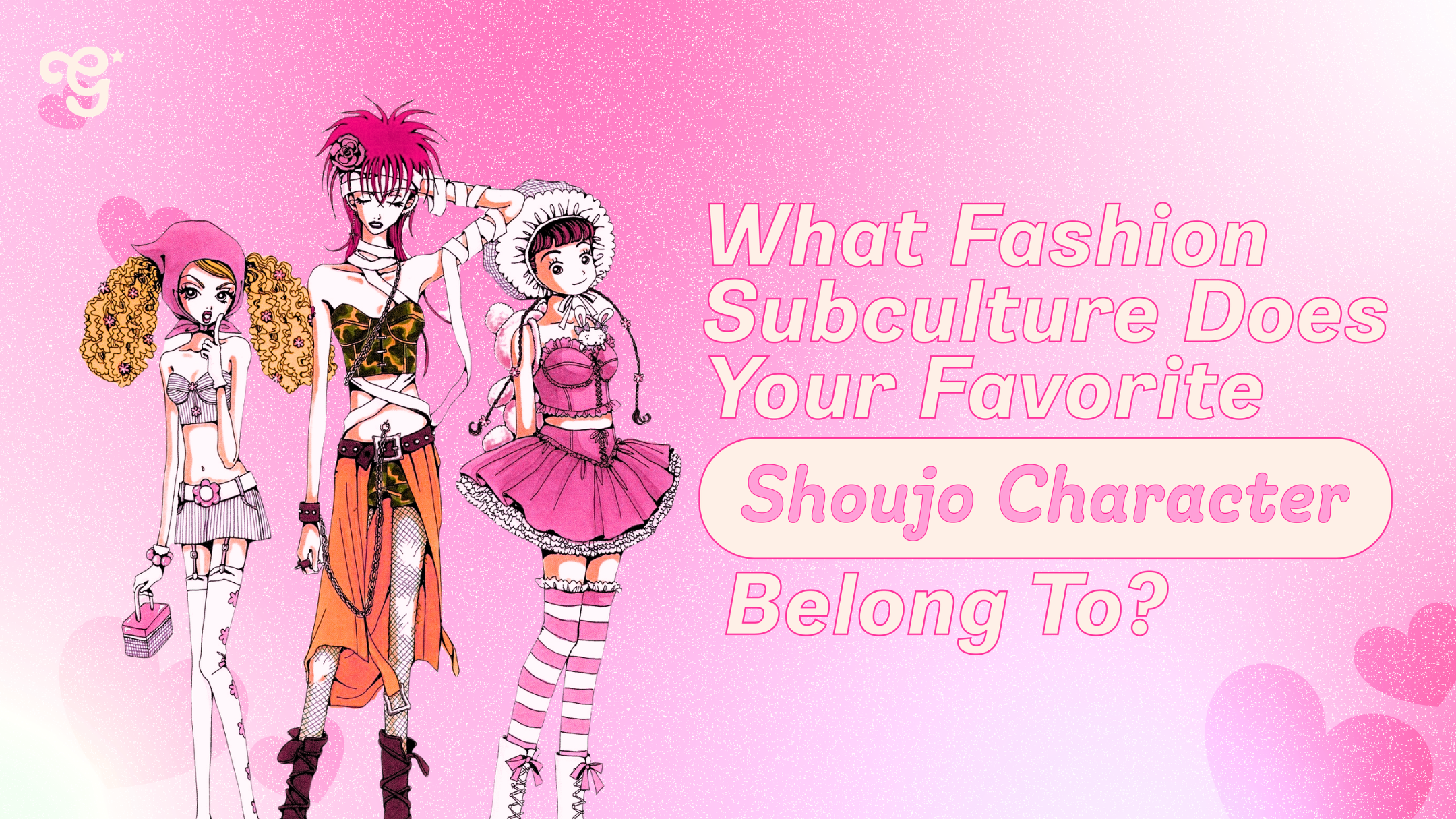
It is without a doubt that “shoujo” has come to influence many of our lives, especially through fashion and fashion subculture.
In recent years, there has sort of been a renaissance of shoujo anime and manga, and rather, the romanticization of living an “aesthetic” lifestyle. Teen girls and women look at their favorite shoujo protagonist and get inspired by their looks and eventually, design their lives around a fantasy.
I credit this resurgence to the ongoing trend defined by the hashtag: #shoujo. On TikTok, Instagram Reels and other short-form platforms, you’ll often see teens and ladies alike creating content around what their favorite character would wear (often coquette/cottagecore), what music to listen to (from NewJeans to Laufey), how to decorate their room, what hobbies to take part in and so forth.
Because of this, I ended up becoming one of them and am now part of this #shoujo culture.

Growing up, I watched whatever was on Toonami like Sailor Moon. I was only a casual anime fan as a kid and then eventually branched out to other pop culture forms during my teen years. It wasn’t until a few years ago after graduating college that I discovered Nana and felt my whole world shift.
Perhaps you’ve taken a similar path to me, where because of how cute these girls looked (and lived) we wanted that for ourselves as well.
I come to you today with a surface level guide of what fashion subculture our favorite characters could belong to, in hopes to inspire and educate on why “shoujo” is no longer just a demographic but a way of life.
I’ve almost taken an ethnographic research approach to this topic because I was inspired by the shoujo hashtag years back and live this lifestyle ‘till this day. I’ll go on Depop multiple times a week to see what new secondhand shoujo styles are uploaded to the platform. Local cupsleeves at cafes have been part of my weekly routine where I shop for cute anime art. And now I create short-form content where I film my outfits inspired by beloved protagonists, in my pink-gloried room.
What is a “fashion subculture” and how has it become so prevalent?

A subculture is an aesthetic movement created by those who congregate through similar interests against mainstream society.
Japanese media first paid attention to subcultures in the mid-1990s. Whether it’s FRUiTS photographer Shoichi Aoki shooting the eye-catching ensembles of youth on the streets of Harajuku, or a group of “deviants” protesting against the economic slump and hardship of society during that time, it’s inevitable that the creativity of youngins prevailed and created the subculture movement.
And at that forefront was Japanese high school girls and their marketing potential that makes Tokyo unique to its Western fashion competitors.
It was the adolescent that controlled what was cool or not. This consumer-driven trend that we still see today is due to the creativity in contrasting eclectic materials–and the beauty of mixing and matching what’s existing to birth something new.
Before we dive into the different fashion subcultures, I present a few disclaimers.

In the following research, I referenced a variety of J-fashion and subculture-specific books, like Fashioning Japanese Subcultures by Yuniya Kawamura, to get an in-depth understanding of this topic. I also revisited my favorite anime and manga, as well as delved into magazine clippings, blogs, news sites and videos by content creators. It’s important to preface that there are various sub-styles within the subculture itself, and mixtures of the subcultures from late 20th century Tokyo to today’s vast digital web. Additionally, there is a deeper history to each subculture mentioned below, to which I only touch on the visual characteristics of the style.
Some characters that I’ve grouped into a certain subculture are also known for having range, so they could also be a part of another group. And since shoujo entertainment typically features a girl in school, I decided to not include uniforms so as to focus on their individuality. Finally, I also umbrella a few subcultures to create a broader category, so that I can fit in more styles.
1. Lolita

A “Lolita” is a girl who portrays the visuals of a Victorian doll. Their garments are frilly and full of ruffles. Edges of a fabric are adorned with lace trimmings. A petticoat accentuates the waist for a fanciful feel. The curls in their hair mimic a fusilli pasta or shaped in an updo. A medium-sized handbag keeps the look collected. Bows and ribbons are essential to the getup. Finally, hair accessories, such as a bonnet, encapsulates a “cherry on top” finishing touch to their look.
Characters that fit this subculture:
- Sweet Lolita – This is the most common lolita style featuring frills, ruffles and lace. Typically in pastel colors.
- Miwako Sakurada, Paradise Kiss
- Momoko Ryugasaki, Kamikaze Girls
- Princess Lolita – Features a royal silhouette, often corseted with an exaggerated umbrella bottom.
- Marie Antoinette, The Rose of Versailles
- Sakura Kinomoto, Cardcaptor Sakura
- Pink Lolita – An all-pink ensemble!
- Mari Shirako, Urahara
- Punk Lolita – Elements include mystic, contrasting colors like black, navy blue and red, silver accessories and fasteners like safety pins and zippers. Straight dark hair with a fringe is typically the focal point.
- Sunako Nakahara, The Wallflower (when not in sweatpants, of course.)
2. Mori Girl

Translated to “forest girl” or “a girl in the forest” – the Mori Girl is simply cottagecore at heart. They wear vintage or secondhand clothing, which are typically layered over one another – think a modest lace, peek-a-boo bolero over a long sleeve A-line dress. They display the innocence of a fairy but not in a child-like connotation. Not accentuating the body shape is key as this style focuses on the flowy silhouette of the garment. Color palette is typically neutral but when they do incorporate colors, it’s mute, not outworldly–and their patterns of choice are polka dot, floral or one-tone. However, opt for pastel pink and you become coquette.
Headwear is simplistic in size and shape but rich in details. The soles of their feet are protected by rounded flats, not platforms. These girls are talented in craft, often making accessories from natural fibers like wool and handmade jewelry. Emphasis on being antique-y but not old; feminine but not too sweet. Hair? Virgin or darker colors.
Characters that fit this subculture:
- Sawako Kuronuma, Kimi ni Todoke
- Tsukimi Kurashita, Princess Jellyfish
- Ann Uekusa, Sand Chronicles
- Tohru Honda, Fruits Basket
- Yuki Itose, A Sign of Affection
- Nanami Takahashi, Bokura Ga Ita
- Nanami Momozono, Kamisama Kiss
3. Gyaru / Himekaji Mix Styles

“Gyaru” is what I like to call, “Shibuya’s rebel princess” as it emerged as one of the ward’s most unique, popular and recognizable subcultures that stems from defiance of the norm. In their mecca, Shibuya 109, a Gyaru’s artificial tan and light colored hair, typically in blonde or light pink, highlights them among the general population. The visual weight of this look is emphasized by their tall and voluminous loose curls and flattened side bangs.
Gold and silver mix jewelry drips from their neck, ears and wrists. Spotting a Gyaru from a mile away can be due to their heavy makeup featuring white eyeshadow, light lip color, heavy eyeliner and sporadic eyelashes to adorn their doe-y eyes. Their look is more revealing on the bottom half with plaid mini-skirts and denim micro-shorts. For the “erotic cute” look, bright-colored tank tops, spaghetti straps and off-the-shoulder are typical garments of choice.
Notably, the biggest emphasis of this style is actually their scruchy, leg-warmer-like white socks, which was all the rage in 1993, according to “Fashioning Japanese Subcultures.” All in all, in their dangerously star-studded platform boots and flamboyancy –and although often overly-sexualized– a Gyaru is not afraid to deviate and rather, encourages head turns.
Characters that fit this fashion subculture:
- Yuri, Nobara and Ugajin, Galism
- Ayane Yano, Kimi ni Todoke
- Mikako Kouda, Neighborhood Story (Honestly she can fit a lot of styles, but I chose to put Mikako under gyaru/himekaji because she wears more “outlandish” clothing than girls her age and during the era she went to high school.)
- Momo Adachi, Peach Girl (Because this subculture stemmed from rebellion, this gives context as to why Momo was unfortunately misjudged and misunderstood due to her looks.)
- Kuranosuke Koibuchi, Princess Jellyfish (Onee-Gyaru specifically, but their catalog is diverse.)
- Nana Komatsu, or “Hachi,” NANA (Hachi can too, fit sooo many styles, like Mori Girl, especially since her fashion changes throughout the series depending on what stage she is in her life. The reason she’s categorized under Gyaru is because her overall style is himekaji leaning–which is a casual princess look. Think “himekaji” as the step-sister of “hime-gyaru.” On the other hand—her sister Nami is 100% gyaru)
4. Punk

Surely one of the most famous subcultures around the world is the British Punk movement of the 1970s that transcended decades and countries, and influences a nonconformist, anti-establishment lens in answer to the structured, majority societies. Often seen in the works of Ai Yazawa, who is famously inspired by Vivienne Westwood – a punk shoujo character is infatuated with strictly silver jewelry and metal-studded accessories, like tight chokers and loose belts. You must own a leather jacket as it’s often seen as “the” motif of punk. Short black hair or colored spikes strike the eye of the beholder, while fishnet stockings, lace-up boots and tartan plaid mini-skirts liberate both femininity and aggressiveness.
To look disheveledly sexy or menacing, embellish a striped long sleeve, crop your graphic tee and don’t hem the edges, then layer with a cheetah print jacket. For girls and women, the punk subculture gives way to being assertive and bold, empowering oneself. Oh! You also likely have lots of piercings on your ears, nose and lips. These shoujo punk fashion tips are an orderly way of being unorderly.
Characters that fit this subculture:
- Black Stones members, NANA (Nana Osaki, Shinichi Okazaki, Yasushi Takagi, Nobuo Terashima)
- Risa Kanzaki, Neighborhood Story
- Arashi Nagase, Paradise Kiss
5. Decora

No rain needed for the rainbow to appear and bless us with its presence because once the decora folks step out, a feeling of happiness delights. Just character-based accessories upon accessories are what defines this eccentric playful style. Layers of hair clips, headbands and bonnets, extensions and bows may seem foreign to the plain, but the more the better for a decora enthusiast. If your color palette is not more than a skittles pack then you’re probably doing decora wrong. Stickers and gems are thoughtfully applied to the face. Plastic beaded necklaces and plushies act as accents while a curated mix of fabric textures encapsulates this extraordinary visual. And no, decora is not cosplay but an incredible form of art and daily living.
Characters that fit this subculture:
- Misa Maruno, Urahara (Probably one of the very few decora shoujo characters to exist.)
6. Visual-Kei

It’s the glam rock of the 1970s and 80s but somehow more visually appealing. David Bowie and KISS are widely recognized as some of the godfathers of this subculture. So think–theatrics, base white makeup, intense black eyeshadow, scenic haircuts, metallic-colored hair and a typically tall stature.
Characters that fit this fashion subculture:
- Kaname Kuran, Vampire Knight
- Vie Ghoul, Skip Beat!
7. Upperclass Fashion Subculture

Just another section dedicated to Ai Yazawa characters once again. They are high-fashion leaning but with a unique flair that allows them to be categorized as fashion subcultures. The Dandy look focus is always the distinctive tailored suit with a brimmed hat to complement. Avant Garde epitomizes artistic expression through innovation, unconventionalism and fashion that knows no boundaries. An elegant aristocrat embraces a birdcage veil or top hat, sleek silk puff sleeves with a corset or bodice, long skirts that modestly covers the legs (opposite of a gyaru) and appropriately heighted heels. When it comes to Parisian fashion–think anything from 1990s Chanel tweed ensembles to minimalist yet timeless looks that cost a lot of money.
Characters that fit this subculture:
- Jōji Koizumi, Paradise Kiss (Dandy)
- Yukari Hayasaka, Paradise Kiss (In Avant Garde, post-transformation)
- Isabella Yamamoto, Paradise Kiss (Elegant/Aristocrat)
- Mariko Nakasu, Neighborhood Story (Parisian Academia)
8. Traditional

These are time-period outfits. Think: Kimono, Hanfu and Hanbok, which are traditional clothing that represents the identity of their country. Similarities we see in a variety of garments include the use of natural fibers such as silk to evoke elegance, and multiple layers of fabric that’s intricately folded and fastened.
Characters that fit this subculture:
- Chieko, Princess Jellyfish
- Miyo Kudou, My Happy Marriage
- Yona, Yona of the Dawn
ATHLEISURE

Embraces a tall and lean build. When not in sporty gear, they are wearing loose fitting simple tees and sweats, with their hair tied up or short.
Characters that fit this fashion subculture:
- Chizuru Yoshida, Kimi ni Todoke
- Risa Koizumi, Lovely Complex
Questions for you: Which fashion subculture is your favorite shoujo character a part of? Would you emulate their style?

5 Ways to Live the Shoujo Lifestyle: A How-To Guide
I want you to close your eyes and think of the word “shoujo.” What do you envision? Which of your favorite characters from a manga or anime do you see as […]
By Dianne M. — April 2, 2026