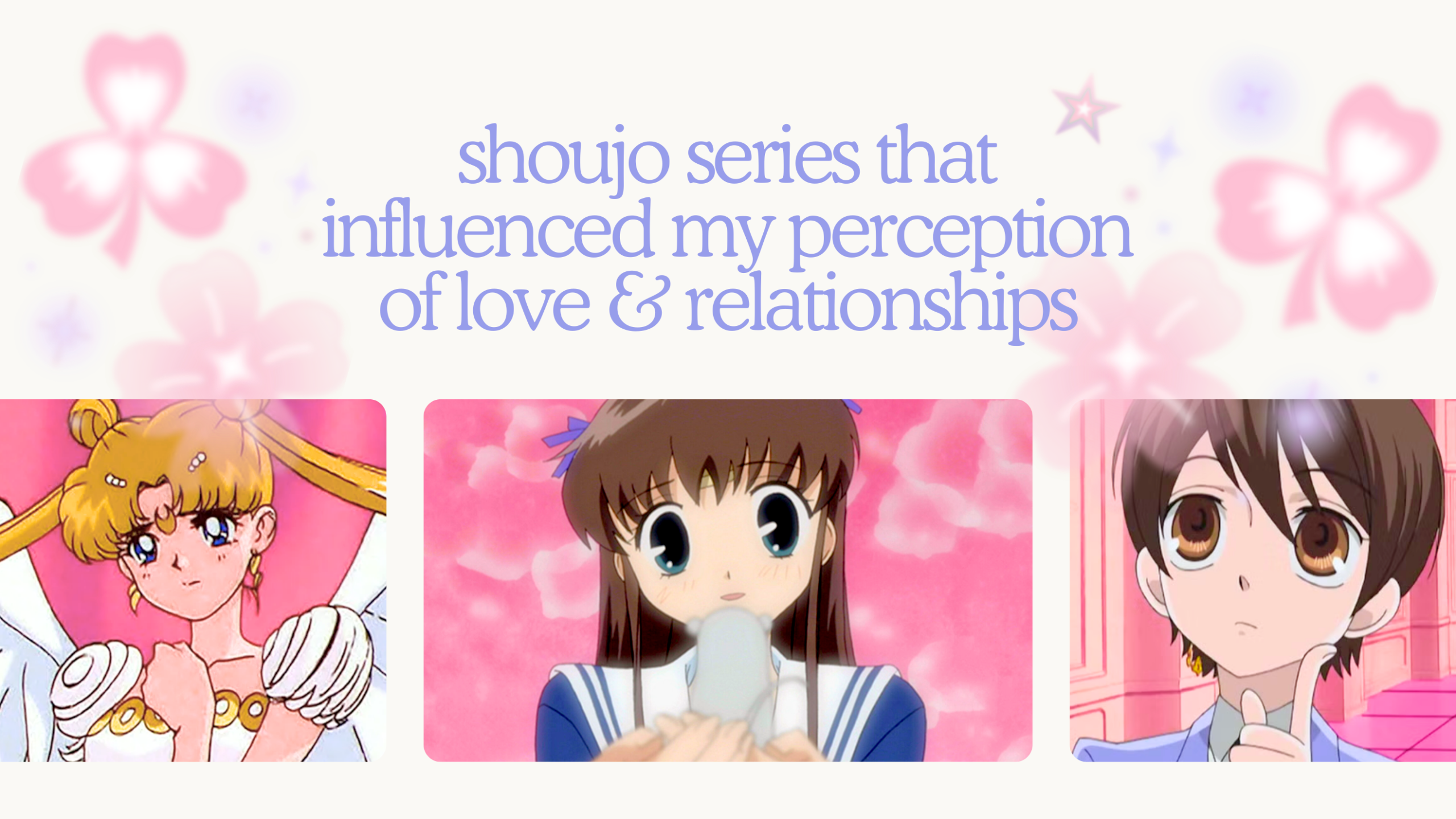
Growing up in the late ’90s and early 2000s, it was much harder to find advice about relationships. There were no TikTok gurus or Reddit threads about emotional labor, and most media didn’t portray romance as real or healthy. Western media often focused on toxic “love at first sight” stories or relied on gender stereotypes. Like the distant, moody guy or the quirky girl whose only purpose was to change someone else’s life. I can’t even begin to explain how “advice columns” in magazines aimed at young women back then did irreparable damage to modern dating as a whole.

But then I found shoujo manga and anime.
It was like reading a guide to understanding love and the complicated feelings that come with relationships. Series like Fruits Basket, Zodiac P.I., Ouran High School Host Club, and Nana (to name barely a few) taught me important lessons.
Yes, they were about “finding love”, but they were also about learning who you are. Seeing characters deal with their feelings, face their insecurities, and learn to speak honestly encouraged me to look at my own emotions. Scenes with inner thoughts, heartfelt letters, or emotional realizations helped me learn to express my feelings, even though I was a shy girl who found it hard to open up.

Tohru Honda from Fruits Basket taught me one of the most meaningful lessons. Her benevolence, empathy, and support for her friends set an example for the kind of person I wanted to become. The way she listened, forgave, and loved without judging others made me think about my own actions and the kind of partner and friend I hoped to be.

Yuki from Cheeky Brat (Namaikizakari) showed me how important communication is. As the eldest daughter, I frequently found it hard to open up. Especially towards a partner. I saw my own challenges in Yuki’s story as she navigated her feelings and the pressures of family. Watching her made me realize that being vulnerable and asking for help aren’t weaknesses. And I didn’t need to feel guilty for putting my needs first.

Magical Girls taught me about love and perseverance
Magical girl series, especially Tokyo Mew Mew and Sailor Moon, taught me some of my first lessons about love through teamwork, loyalty, and responsibility. These stories showed that love can also be a commitment to your friends, your values, and showing up even when you feel unsure.
Sailor Moon, especially through Usagi, made a big impact on me. Usagi is herself: a crybaby, often late for school, struggling with grades, and not the typical “strong” leader or hero. Still, in every timeline and every life, she chooses to do her duty.
She shows up not because she is fearless or perfect, but because she loves deeply. Her loyalty to her friends, her courage to stand up for her feelings, and her belief in others are what save the world. She proved that love, above all else, needs heart.

The “ugly” side of romance
Nana showed me the sides of love that hurt. It showed me how things like insecurity, ambition, timing, and trauma can shape relationships. And that loving someone deeply doesn’t always mean things will work out. Nana explored emotional dependency, miscommunication, jealousy, and the harm that can grow when people don’t know how to care for themselves or each other.
It was one of the first series that helped me realize passion alone isn’t enough to keep a relationship going. And that love can exist alongside heartbreak, regret, and loss. Watching the Nanas struggle made me face the truth that romance can be messy, unfair, and painful, and that noticing unhealthy patterns is just as important.

Shoujo taught me to expect more from romantic partners
Hak from Yona of the Dawn practically radicalized me. In the manga, Hak’s love for Yona was so strong, you could feel it throughout the entire story, despite their romance not even being the main plot point. He protects her without expecting anything in return. He lets her grow and respects her choices, even when it’s difficult for him. Hak’s devotion to Yona never wavered; he wanted the best for her, regardless of whether it risked distance between them.

Ouran High School Host Club taught me different lessons through each host club member, showing different ways to love the same person. Tamaki’s love in the manga is big and dramatic, but it’s also genuine. He pays attention to people’s feelings, apologizes quickly, and always tries to understand those he cares about. The twins show their affection in two ways: Hikaru’s is impulsive and emotional, while Kaoru’s is more reserved and selfless, putting Haruhi’s happiness first. Kyoya is quiet and thoughtful. Mori and Honey show their care through support, protection, and acceptance.
I realized it doesn’t matter how loudly you are loved. As long as it’s always caring, present, and thoughtful. I realized I deserved not just romance, but devotion. I knew I would never settle for a love that didn’t choose me every day.

Shoujo stories also made me think more about myself
Looking back, shoujo anime and manga were a manual for love and relationships at a time when good advice was hard to find. They taught me to be honest about my feelings, set boundaries, and approach romance with both emotion and good judgment. In a world where teen/young adult romance is often not taken seriously or portrayed wrongly, shoujo gave me a way to explore my feelings with care and self-awareness.
For anyone who grew up without many healthy examples of love, shoujo can teach us how to love better, beginning with loving ourselves.