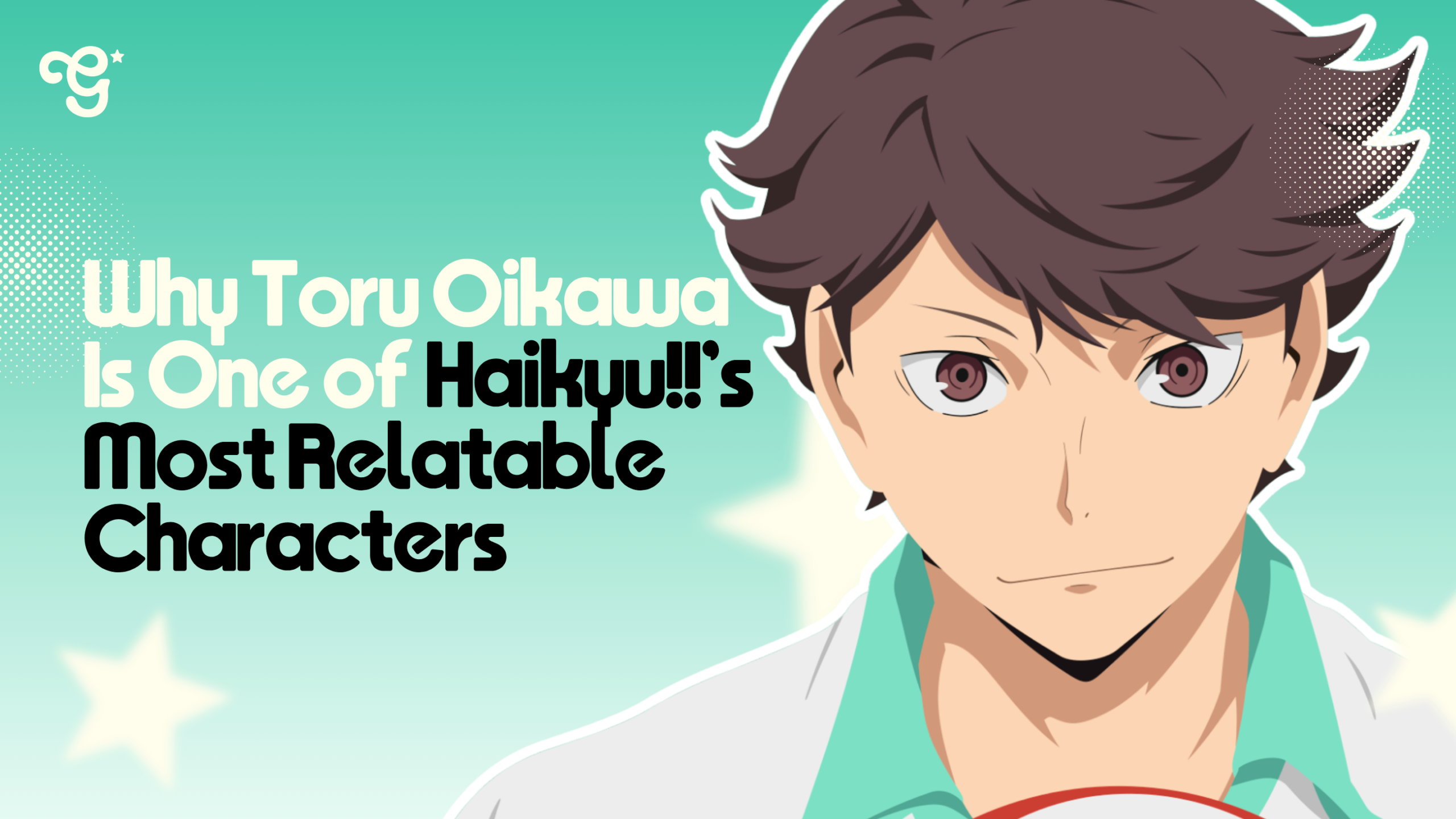
Toru Oikawa is one of the best setters in Haikyu!!, but he rarely gets to feel like the most talented person in the room. Around him are players like Kageyama and Ushijima, people whose abilities seem to announce themselves almost immediately, while so much of Oikawa’s own brilliance has been built through repetition, observation, and an almost punishing amount of work. That is part of what makes him so recognizable. Most of us know what it feels like to work desperately toward something only to meet someone who seems to have started closer to the finish line, and few feelings expose our insecurity faster than realizing that the thing we fought to become good at may come more easily to somebody else.
What Makes Toru Oikawa Such a Compelling Character?

The painful part is that everyone around Oikawa mostly sees what all that effort eventually produced. They see the serve, the confidence, the control he has over the court, and the way he can pull the best out of an entire team. They do not experience those abilities with the memory of every repetition attached to them the way Oikawa does. We know every hour, failure, doubt, and ugly attempt hidden underneath our own accomplishments, while other people often reach us only as finished products. Oikawa looks at Kageyama and sees instinct. When everyone else looks at Oikawa, they probably see talent too.
And Oikawa does believe in himself. That almost makes the whole thing worse. He believes he can improve so fiercely that every prodigy becomes another challenge he refuses to let push him off the court, but believing you can catch up does not make it painless to watch someone learn quickly what you had to exhaust yourself to master. It does not stop the fear that if you rest too long, someone younger, faster, or more naturally suited will take the place you worked so hard to earn.
Oikawa responds to that fear in ways most people would rather hide. He becomes jealous, prideful, petty, obsessive, and sometimes cruel. Those qualities are not separate from why people connect with him. They are part of it. Oikawa gives shape to the uglier side of ambition, the part that can exist quietly underneath genuine confidence, hard work, and the version of ourselves we would rather other people see.
When Someone Younger and More Talented Comes Along

Kageyama gets under his skin long before he actually surpasses him. When he first approaches Oikawa for help, Oikawa is older, more experienced, and still the player Kageyama looks up to enough to ask how he developed his serve. It should be flattering. Oikawa already possesses something Kageyama wants badly enough to learn from him, but he can barely enjoy being ahead because he is already imagining what happens when Kageyama catches up.
He sees how quickly Kageyama learns. He sees the precision, the instinct, and all the potential still sitting underneath his immaturity. Suddenly being better now does not feel especially reassuring. Kageyama becomes frightening because he represents something more specific than talent: replacement. He is the younger person coming up behind you, the one who might eventually do what you do faster, cleaner, and with less visible struggle.
And Oikawa is not graceful about that fear. He refuses to help Kageyama, becomes increasingly hostile toward him, and eventually reaches a point where Iwaizumi has to stop him from lashing out. Haikyu!! never makes his insecurity especially pretty. Oikawa is not simply wounded or misunderstood. He can be bitter, unfair to someone who has done nothing wrong, and perfectly capable of recognizing another person’s ability while resenting them for possessing it.
Oikawa’s Jealousy Makes Him So Human

It also helps explain why Oikawa is such a divisive character. One of the biggest criticisms of him is exactly what happens with Kageyama. His jealousy becomes petty, hostile, and ugly enough to hurt someone who has done nothing to deserve it. For some viewers, that behavior becomes difficult to forgive. For others, strangely, it is part of what makes him feel so recognizable.
The difference may be that Oikawa does not hide emotions most of us have learned to keep private. We congratulate someone for receiving the opportunity we wanted. We tell a friend we are proud of them even when their success has just made us question our own. We can genuinely admire somebody and still feel that ugly little flicker of why wasn’t that me? Usually, that feeling stays inside us. Oikawa lets it spill out.
That does not make the way he treats Kageyama acceptable, but it does make him painfully human. The jealousy, resentment, fear, and wounded pride are all there without being cleaned up into something easier to sympathize with. Some people see those qualities and recoil from him. Others recognize something they have felt themselves and find a strange kind of comfort in seeing it acknowledged at all. Oikawa exposes the part of ambition we are usually expected to hide, and the fact that he can carry those feelings, hurt people because of them, grow beyond some of them, and still remain more than his worst moments is a large part of why he stays with people.
The Pressure of Always Having to Improve

That recognition also feels especially current in a culture where progress can start to feel like proof that you are doing life correctly. There is always another milestone to reach, another skill to develop, another way to demonstrate that you are moving forward instead of falling behind. For a generation whose school, work, and ordinary growing up were disrupted by the pandemic, that pressure can feel even stranger. Life started moving again, but not everyone felt as though they were starting from the same place.
Oikawa gets to hold all of those contradictions at once. He can resent Kageyama while respecting his ability, believe completely in himself while still feeling threatened, and be arrogant and insecure at the same time. His confidence is not some fake personality covering the “real” frightened person underneath. The confidence is real. Oikawa knows he is good, enjoys attention, and believes that he belongs on the court. The insecurity is real too.
What Oikawa’s Rivalry With Ushijima Says About Talent

His pride is one of his worst qualities and, strangely, one of the things that saves him. It makes him petty, makes losing hurt more, and feeds some of his hostility toward Kageyama. But that same pride refuses to let him look at another person’s talent and conclude that there is no place for him beside it. Kageyama’s genius never becomes a reason for Oikawa to stop, and Ushijima’s power never convinces him that volleyball belongs only to people born with better advantages.
That is where his work ethic starts becoming a little frightening. Improvement feels good when effort produces visible results, but eventually the standard moves. Being good stops feeling like enough once you know what excellent looks like, and excellence stops feeling safe when somebody else appears extraordinary. Rest starts to feel dangerous because there is always another weakness to correct or another person moving faster behind you.
Perfectionists know how quickly that shift can happen. Achievement stops being something you enjoy and starts becoming evidence that you are still doing enough, still progressing quickly enough, still deserving of the place you have earned. Success gives you relief, but often only until the next standard appears. Oikawa’s obsession with improvement comes from loving volleyball, but sometimes getting better feels less like desire and more like self-preservation.
What Oikawa Fails to Recognize About Himself

Oikawa is not only afraid of failing. He is afraid of becoming replaceable. He has already worked hard enough to become exceptional, but exceptional never feels permanent when Kageyama is improving so quickly. Being surpassed threatens more than his ranking as a setter. It threatens an identity he has spent years constructing around being good at this one thing.
Ushijima scares him for a different reason. There are things about Ushijima that Oikawa simply cannot reproduce through effort. His height, power, and left-handedness give him physical advantages Oikawa cannot practice himself into having. Oikawa can study him, strategize around him, and become strong enough to compete with him, but he cannot make their starting conditions equal.
And Haikyu!! never really pretends otherwise. People are not born equal in ability, circumstance, body, instinct, or opportunity. Some people genuinely begin closer to certain goals than others. Oikawa is not wrong for noticing that. He goes wrong by letting the most obvious forms of talent grow so enormous in his mind that he struggles to recognize what is extraordinary about himself.
Oikawa’s Greatest Talent Is Bringing Out the Best in Others

One of Oikawa’s greatest abilities is much harder to point to than Ushijima’s strength or Kageyama’s precision. He understands people. He watches his hitters, notices what they need, adjusts his tosses, reads their habits, and understands how to bring more out of them. His setting is not only about how perfectly he controls the ball. It is about how effectively he can make the person on the other end of that ball better.
Early Kageyama struggles with exactly this. His technical precision is extraordinary, but he initially treats a perfect toss like an objective thing. If a hitter cannot reach it, then the hitter needs to improve. Oikawa has already learned that technical perfection means very little if it cannot become useful in the hands of another person. His brilliance as a setter is partly relational. He does not just perform well himself; he understands how to make the people around him perform better too.
Sometimes We Struggle to Recognize Our Own Strengths

There is something almost ironic about the fact that Oikawa is much better at recognizing everyone else’s gifts than his own. Kageyama’s instinct looks like talent because Oikawa can see it immediately. Ushijima’s physical ability looks like talent because it announces itself the moment he attacks. Oikawa’s own abilities were built slowly enough that he remembers constructing them, which can make them feel less like gifts and more like compensation for everything he thinks he lacked.
That feeling is painfully familiar. The abilities we had to consciously develop rarely feel miraculous from the inside because we remember being bad at them. Other people see the confident speaker while we remember rehearsing every word, or they see the finished work while we remember every version that failed. Everyone else sees the result. We remember the cost.
That private comparison follows Oikawa all the way into one of the most painful moments in his story, when Haikyu!! lets him play brilliantly and makes him lose anyway. Against Karasuno, Aoba Johsai fights until the end. During the final rally, Oikawa is driven so far outside the court that the play should almost be over, but he still chases the ball down and sends it back toward Iwaizumi, creating another attacking opportunity from a position that looks impossible. It is the kind of play that should belong in an inspirational ending.
That set contains almost everything Oikawa has spent years building. His court awareness, technique, trust in Iwaizumi, understanding of his teammates, and refusal to give up on a play all come together at once. He creates another chance when there should not have been one.
And Aoba Johsai still loses.
The Reality That Hard Work Doesn’t Always Pay Off

There is something brutal about that, because Oikawa doesn’t lose after suddenly becoming inadequate. He doesn’t fail because he didn’t care enough or because he should have worked harder. Haikyu!! simply refuses to make effort into a transaction where enough suffering eventually guarantees the reward. Oikawa never reaches Nationals with Aoba Johsai. Kageyama eventually gets there. Ushijima already has.
Oikawa leaves high school without reaching the goal he spent years chasing, and no neat lesson makes that stop hurting. He never gets a clean answer for what effort is worth when it still does not give you what you wanted. Instead, he has that ridiculous, stubborn pride telling him losing doesn’t mean he no longer belongs.
That is part of why he means so much to perfectionists. Becoming healthier does not require becoming completely detached from comparison, ambition, pride, or the desire to be exceptional. People are rarely that clean. Sometimes losing still hurts too much, and sometimes somebody else succeeding awakens something petty inside us even when we wish it did not. There is something relieving about a character who does not require us to deny those parts of ourselves before we are allowed to grow.
Finding Meaning in Failure

Oikawa never becomes meaningless because he transcends jealousy and turns into someone untouched by comparison. He remains recognizably himself. Jealousy can exist beside admiration. Pride can damage you while also giving you the nerve to keep showing up. Insecurity can exist beside genuine self-belief. You can look at somebody better than you and think both I hate how easily that came to you and I am still going to meet you there.
And Oikawa really does live through the thing he spent so much of his youth fearing. He gives volleyball everything he has and watches players he considers more naturally gifted reach the place he wanted first. There is no reason to soften that loss or pretend it didn’t matter. It mattered enormously to him, but his life does not end there.
Oikawa’s Journey Is a Reminder That It’s Never Too Late

Oikawa goes to Argentina, keeps developing, becomes an Argentine citizen, and eventually reaches the national team. The boy who spent so much time measuring himself against prodigies eventually stands on the same international stage as them. Not because Haikyu!! suddenly reveals that Oikawa was secretly the most gifted player all along, and not because Kageyama or Ushijima become less extraordinary, but because Oikawa never lets their talent stop him from getting better himself.
That is what makes his ending comforting. It does not erase the unfairness that made him angry in the first place. Some people really do begin closer to where we are trying to reach. Some will learn faster or possess something we cannot reproduce no matter how much we practice. Oikawa’s story never asks us to pretend otherwise. It just refuses to let those differences decide everything.
You Can Still Succeed Without Being the Best

His pride causes him plenty of pain, but there is something almost beautiful about the part of him that refuses to be made smaller by another person’s brilliance. He can envy Kageyama and still believe he belongs beside him. He can lose the future he imagined for himself in high school and still refuse to treat that loss as the end of what volleyball can become for him. Somebody else being extraordinary never has to become proof that he should disappear.
That is why Oikawa resonates so deeply with people who are ambitious, perfectionistic, or constantly afraid of falling behind. He never proves that hard work will always beat talent, and his story would be much less meaningful if it did. Sometimes somebody really is better. Sometimes you really will have to work harder. What Oikawa shows instead is that another person’s talent does not get to decide whether your effort was worthwhile or whether you are allowed to keep trying.
Maybe that is why Oikawa’s pride becomes so moving by the end. The same part of him that makes failure unbearable is also the part that refuses to be erased by it. Sometimes the most important thing pride can say is not I am better than you. Sometimes, after all the comparison, jealousy, exhaustion, fear, and years spent fighting to keep up, it is simply I am still here.