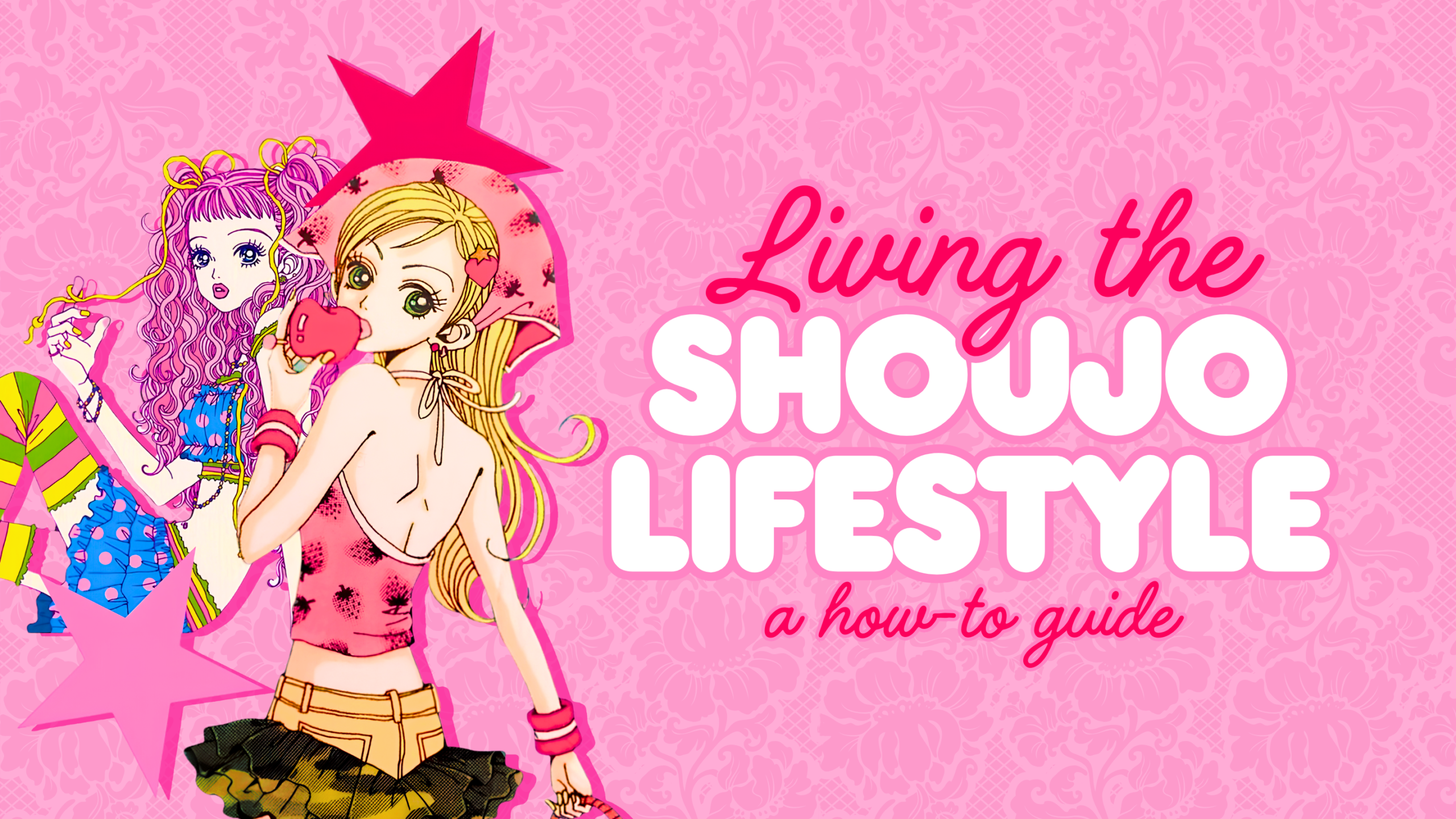
I want you to close your eyes and think of the word “shoujo.” What do you envision? Which of your favorite characters from a manga or anime do you see as closely replicating what it means to be a ‘shoujo protagonist’ or to live the ‘shoujo lifestyle’?
What does ‘shoujo’ mean to you?

I anticipate you’re thinking about the common traits: fashionable, light-hearted, feminine, affectionate, perhaps a little naive. Maybe it’s someone who’s navigating complicated relationships or embracing their coming-of-age stage of self-discovery.
While its characteristics can seemingly be easily identified, the identity of “shoujo” is quite complex. Shoujo is not necessarily a theme but is actually to describe a specific demographic and culture.
By definition

Shoujo is targeted towards girls or young adults. They are often found exploring the different stages of life, immersing themselves in stories they can either relate to or fantasize about. It can be an outlook on everyday life or escapism. Think: Britney Spears’ song, “I’m Not a Girl, Not Yet a Woman.”
Popular magazine and leader in shoujo manga news – “Shojo Beat” – describes shoujo media to cover romance, drama, and fantasy. You can find several niche categories within each genre that are identified as shoujo such as magical girl series like “Sailor Moon” and “Cardcaptor Sakura”; romance intermingled with slice-of-life like “Lovely Complex”; you can get even deeper with more dramatic, life-changing stories like “Nana” that both etch at the heart for being empowering yet is met with devastation.
Modern-era shoujo

In the modern era, shoujo in Japanese media is dominated by female mangaka. Commonly writing stories about girls’ lives, and sometimes as an outlet for them to express their voices and personal experiences.
The goal of this post is not to uncover the history of shoujo. But I will touch on more general, even stereotypical, themes found in our favorite shoujo series. Particularly, character traits that recur across several stories, and how I personally incorporate them into my life.
It’s important to note that gender is a social construct, and anyone can enjoy shoujo manga. There’s also no right or wrong way to live the “shoujo” lifestyle, because, at the end of the day, the common threads, life’s progression, and the conflicts we encounter in the stories we read and watch are inspired by real-life experiences we all go through. We leave it to you to interpret and implement in your life.
Here are ways you can live the shoujo lifestyle!
(Before we begin, it’s important to note that the romanized word: “shoujo” and “shojo” are the same phrase with different spelling. We decided to use “shoujo” for this post.)
1. Channel your inner fashionista

I argue that in shoujo media, fashion is as important as the story. As a shoujo protagonist, what you wear also helps explain your personality.
It’s common for characters who wear voluminous frilly skirts, mixed patterns and uniquely shaped hair accessories to bring a sense of refreshing energy, a cheerful personality and optimism about life – even as an innocent, hopeless romantic. Think Nana Komatsu (Hachi) or Miwako Sakurada.
If you find solace in modest styles that’s not as attention-seeking but focused more on the flowy silhouette of the fabric, soft details of lace as an elegant accent and mute colors to complement your virgin hair–like a minimalist mori girl – you probably think of yourself as a bit awkward and shy at first encounter. But it’s when you take interest in developing a relationship or friendship with other people and slowly warm up to them–that you then bloom out of the once delicate flower that you were. That’s Sawako Kuronuma.
Shoujo styles don’t only take a liking to just the gentle and flirty looks of everyday J-fashion.

It’s the glamour, avant-garde, out-of-this-world (and out of my budget) gowns that George Koizumi tailors to Yukari Hayasaka in Paradise Kiss. It’s the punk rock movement drilled into Vivienne Westwood’s history that’s now engraved in Nana Osaki’s outlook on life. Even the more revealing fashion of the Y2K era with hints of gyaru in Peach Girl can offer a lens into teenage rebellion and school drama.
Mangakas draw shoujo heroines in a way to sell to their audience the fantasy. They do so by staying on top of fashion trends that’s popular with high school girls in different eras and designing pieces that they wish they could buy in store. Shoujo manga is like Pinterest for anime fashion enthusiasts.
Fashion is not only an act of visual presentation but a form of expression. Until someone gets to know you and your personality, your look makes the first impression.
2. Think about your goals…and GO FOR THEM!

Probably my favorite theme in shoujo material is a character trying to discover who they are. Transitioning from graduating high school to now having to navigate the world feels scary, but you’re not alone.
As a shoujo protagonist, you’re determined to fulfill some kind of void or solve a problem in your life. It can be anything from exploring different careers to finding your romantic partner to even learning how to love yourself.
I pose the question to you: What is your goal in life?
Mikako Kouda of Neighborhood Story taught me that you can overcome any obstacle, so long as you’re ambitious, passionate about what you’re doing, and being true to who you are. She graduated from the Yazawa School for the Arts, founded her fashion label Happy Berry, and lives a happy life with Tsutomu still by her side as a fellow husband-photographer.
Shoujo manga and anime tugs at my soul because it sparks ideas in me of what I want to do with my life and carefully think about the kind of person I want to be.
3. Build relationships

Despite the last two being huge influences on shoujo media, it’s the development of human relationships and friendships that are at the core of each shoujo story.
In all the anime and manga I’ve mentioned earlier, each story explores the deeper emotional connections the main character has with their allies. This is the beauty of shoujo storytelling as compared to the more heroic, action-packed counterpart–shonen.
Shoujo narratives intentionally leave you interpreting the moral of the story. The intense bond between Nana and Hachi can be read as queer, with several scenes underscoring what their sexual identities might be, rather than merely a platonic friendship. The friends-to-lovers trope of Risa and Otani challenges height dynamics in heterosexual relationships–hurdling through the societal pressures of the girl having to be shorter than their counterpart so the man can protect her. Even the power of friendship helped Sailor Moon conquer all evil.
Whether you’re a bashful or bold protagonist, the people you meet along the way and the relationships you develop with them shape who you are as a human being. While there’s no cookie-cutter formula for how to go about life, human relations are a natural progression of your growth.
4. Explore different hobbies

I cannot stress enough the importance of having hobbies and developing your skills when you’re living the shoujo lifestyle.
Sometimes those hobbies turn into lifelong passions. Think about Ichigo in Yumeiro Patissiere. Ichigo wasn’t really good at anything growing up. But because of the quality time spent with her grandmother, she discovered her love for baking desserts and eating pastries. With the goal of replicating her grandmother’s recipes, Ichigo decides to attend a prestigious culinary school. She went through the competitive process of earning the prestigious title of “pâtissier.” Her journey is admirable because, despite the hardships and learning curves, she enjoys what she does and never gives up.
Hobbies also enrich your life. In a capitalist society where routine days blur as you try to make ends meet, life can feel depressing and meaningless. Doing something you love outside of work can help combat misery and dejection. Your local public library is a great resource if you want to gain knowledge about a certain topic – from checking out books to attending workshops – all for free.
What hobbies bring you happiness?
5. Reflecting on yourself

While you’re living your shoujo life, self-reflection is necessary. You’re going through a big change, so take a moment to sit with your feelings and process your emotions. Understand that you’re likely experiencing a turning point in your life. Think carefully of the steps you need to take to get yourself out of the rut you’re in, then reassure yourself that everything will be okay.
There are countless lessons throughout our journey on earth. You can learn from it – like Yukari and George ending their situationship and deciding to follow the path to fulfillment. Then there are other times when our wishes don’t align with reality – take the ongoing toxicity of Nana and Takumi’s relationship, for example.
Life continues to evolve. You’re expected to mature after each arc ends and acquire wisdom that you can pass along to the next generation. Irrespective of what path you choose, the complexities of a shoujo protagonist’s expedition reflect the journey of real-world beings.
In what ways do you portray a shoujo protagonist in your life?
Living the “Shoujo Lifestyle”
Living the shoujo lifestyle isn’t about fitting into a perfect mold. It’s about recognizing the moments that make you feel like the main character in your own story. Maybe you show this through your style by chasing big dreams, building close relationships, trying new hobbies, or taking time to reflect on how you’ve grown.
However you bring shoujo into your life, remember you’re always growing, always deserving of love, and that your path is something special.